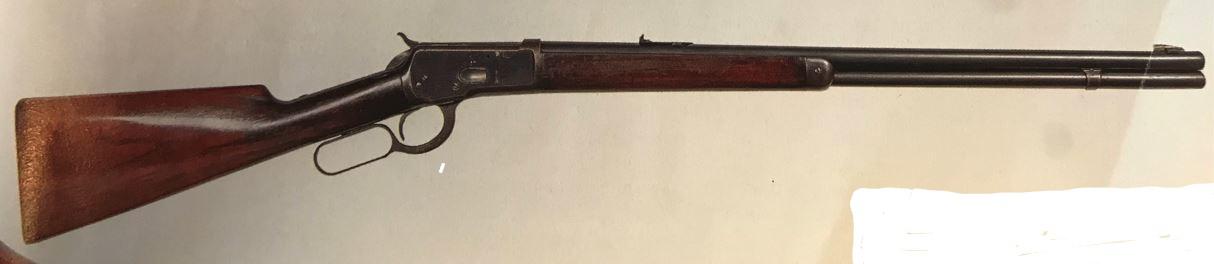
We’ve all heard of the famous Winchester rifle as depicted in the above photograph. A weapon that features in just about every western movie we’ve seen, well certainly those western movies post the single shot musket era of the Davey Crockett days. Now how many of you have heard of the Royal Navy’s Winchester rifle?
The Winchester rifle is far more familiar in scenes starring stereotypical hero cowboys such as John Wayne and Clint Eastwood or Great Plains Indians, bank robbers and stage coach hijackers.
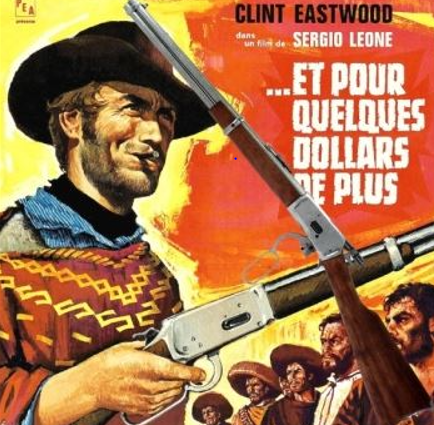
Clint Eastwood

John Wayne
Hardly the weapon of choice for the sailors of the Royal Navy but that’s exactly where they could be found during WWI, aboard a minesweepers.
When it came to the issue of small arms the Royal Navy was always at the back of the queue. Sailors were supposed to sail their ships or shoot at the enemy with their deck mounted guns not with rifles. As a result of this thinking the navy always received poor quality small arms. An example being the 1796 Sea Service pistol known as the hand gun of Nelson’s navy which was of very poor quality when compared to those issued to the Calvary. Naval muskets and rifles did slightly improve during Queen Victoria’s reign but there were made up of old components already in store.
At the outbreak of WWI, the British Government was desperately short of rifles as the arms industry hadn’t geared up sufficiently and initially couldn’t meet the insatiable demand as ‘Kitcheners’ army rapidly expanded to be sent to the front. The then current and well known, reliable Lee Enfield 0.303 rifle was reserved exclusively for the troops in France
Not surprisingly the RN didn’t get any consideration when it came to the supply of rifles. The First Sea Lord at that time was Winston Churchill and he ordered the Royal Navy to give up it’s stock of rifles to the army. These were replaced by the Japanese Type 38 Arisaken rifle. Japan was of course Britain’s ally during WWI. By the end of 1915 these were withdrawn and sent to Russia which was loosing rifles at an alarming rate due to many setbacks it was suffering on the Eastern Front. Historical records show that it would appear that the Lord’s of the Admiralty were anticipating a shortage of rifles as in 1915 they had started buying large numbers of 0.44-40 calibre Remington model 1412 and Winchester Model 1892 rifles direct from the U.S. These rifles were destined for sailors whose duties meant they had to be armed but would rarely fire them in anger. Duties such as sailors acting as dockyard sentries and those serving aboard armed trawlers and especially minesweepers. During WWI the Admiralty purchased a total of 21,000 Winchester rifles.
Apart from direct enemy action minesweeping was probably the most dangerous job performed by the Royal Navy at sea. The process of mine clearance meant bringing the mines to the surface. Often working in pairs minesweepers paid out long cables from the vessels not surprisingly known as a sweep which was attached to a float known as a Paravane. As shown in the diagram below:-

The Paravane was there to keep the cable away from the minesweeping vessel by creating a large arc to the stern of the vessel but also running parallel to it at a predetermined depth. This cable would literally sweep up the mines. When the sweep cable snagged the mine’s anchor cable it would cut it free allowing the mine to rise to the surface. Sailors would then use the Winchester rifle to shoot at the mine with the aim to explode it.
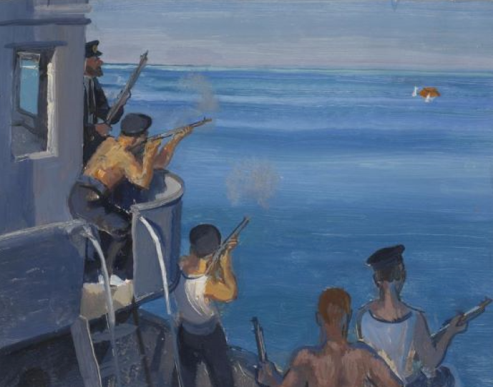
Painting depicting sailors of a minesweeper shooting at a surfaced mine
To do this a bullet had to hit one of the mines protruding horns. How successful this was from the deck of a rolling minesweeper in adverse weather conditions is not recorded. Even in the most perfect of weather, hitting one of the horns would have called for excellent marksmanship. Hardly a skill taught to sailors of the time. However, although mines brought to surface were in the main safely despatched it is probable that in most cases the rounds perforated the mines casing causing it to sink out of harms way to the sea bed. There was the ever present danger that due to choppy waters and currents that the minesweeper might possibly collide with the now drifting mine and be sunk as a result of the subsequent explosion.
So that’s the Royal Navy’s association with the Wild West! So next time the RAF call the Navy a bunch of cowboys well it would appear that the crews of minesweepers were!